Keep it positive…
There is a game I am all too familiar with. If you are a performer, I’m sure you are too. It’s called the “feel sorry for myself” game. Also known as the “pity-party” game. And I refuse to play it.
I had a 4 hour callback yesterday. I showed up with 50+ other girls who all looked vaguely like me, each of us competing for 4 spots in a regional theater musical. Yes, 4. I sang my prepared callback music, learned a butt-kicking dance combo, and then waited for the cut. The production team kept roughly 12 girls. I gathered my stuff, tried to think positive thoughts, and walked out of the building. I was amazed at the conversations I heard around me as I left.
“They didn’t even look at me”
“I didn’t get to sing. So unfair”
“They didn’t take enough time to teach the combo”
Umm, I’m sorry?! Dear fellow auditioners, does any of this matter? Did you do your best work? Did you make choices that made you stand out from everyone else? Do you really have such a high opinion of your talent that you think you know better than the production team of what they want? If you can’t handle the pressure and accept rejection, then leave this industry! There are plenty of other people who are equally or less talented than you who don’t share your same complaints.
Okay, I’ll admit. I used to play this game. I took every audition rejection seriously, and vowed I would find directors who better valued my talent. Even now I get peeved when I feel like my scene partner ruined my read, or like yesterday, the girl next to me does all sorts of tricks in the free-dance section of our dance audition, drawing attention away from anyone but herself. But, here is my alternative choice to playing the “feel sorry” game, and my challenge to you:
Pin-point what you did right in your audition/callback. What things have you improved on since last time? What things need work? What are the steps you need to take to be a peak performer in your auditions? Are you surrounding yourself with positive people who encourage and stretch you to be who you need to be?
I wish there was an easier way to do this. I wish I was better at not holding onto disappointment. One day I won’t be living audition-to-audition and worrying about where my next show will be coming from. But that day is not today. So, I put on peppy music (my go-to is Legally Blonde The Musical!) and continue to schedule more auditions via actorsequity.com. OMG you guys!

Representation? (part 1)
A few weeks ago I was contacted by a talent agency AND a talent manager, after performing in a city-wide audition sponsored by a local union I’m a part of. I was thrilled, excited and scared! The next week I went in to meet the agent…. And here’s what happened….
9:30am. Parking downtown… Always fun. There are too many buildings! I can’t tell from my GPS where I’m supposed to go. 9:45. I think I found the building, now for coins for the parking meter. Um, I only have enough coins for an hour and fifteen minutes, and here comes the parking citation officer down the street… This could be bad! I quickly fill the meter and start scouting for the building number.
9:47. Find the building, buzz myself in, wander towered what I hope is the right elevator… Find the agent’s office. Breathe, Hannah, BREATHE!
9:50. I’m afraid to be too early for my 10am meeting. She must be super busy! Guess I’ll sit in the lobby, out of her sight, and try to be busy on my phone. 9:59. Take a big breath and knock on her door. She waves me in, motions for me to sit down. I nervously dump my purse and jacket on the floor. My chair squeaks whenever I even slightly move. Am I wearing enough makeup? Is my wardrobe the right choice? Do I look happy, engaging, pleasant, and confident? Or do I look as nervous and inexperienced as I feel?
10:07. I’m still sitting and smiling as she types feverishly on her computer; I’m sure trying to submit clients for some last-minute audition.
10:12. Trying not to look at the clock or think about my ticking meter as she talks to the mailman. Did I mention I’m nervous?
10:17. She stops typing, starts talking, and walks me into her office. This is the part of the story where I tried to stop thinking about the clock, and for the most part, really enjoyed my visit with her! You know you’ve found the right agent when you don’t feel like a big dollar sign, and instead feel like a friend and fellow artist. I had done my research on her before our meeting, and found everything she said to be satisfactory and encouraging. She had a good idea of where she’d like to see my career in a few years, and it matched almost everything I saw in my 5 year plan as a performer. Awesome feeling. I love having assurance from an outside source, even an almost-stranger like her, that I was on track for where I need to be for my age, type, and training.
11:02. We finish up our meeting, I casually say I need to go check my parking meter, after we make plans for a follow-up meeting and potential contract signing.
11:07. I can breathe! Not only because I have a potential new agent, but because I have no parking ticket on my car!
Part two coming soon…..
Questions are Key!
Any Dramaturg who’s had a director scream “I hate your notes!” and then use every one of them, knows that questions are a Dramaturg’s best friend. Putting a note in the form of a question can be extremely beneficial when dealing with sensitive issues in production. They make you consider and reconsider a scene and all its possible meanings. When you are in a tough spot with a director regarding a scene, how do you approach them? If something just isn’t working, how do you bring it up? My favorite way is to say whatever you think the problem is, in the form of a question. This eases the tension while forcing the other collaborators to view the subject in a new way, perhaps a way they had never conceived of. It is always good, as a Dramaturg, to have a couple of key questions readily available in your mind. I am always amazed at how one question could change the whole tone of a room.

In my experience the back and forth of what did work and what didn’t can get to be monotonous. But, if instead of saying this scene is bringing down the whole show, you can simply ask, what makes this scene feel different? Or, what did you want to communicate to the audience in this scene? The answers to these questions sometimes define what a production will ultimately be seen as. Are there politics involved? Usually, yes, but they are more easily adaptable than emotions. Emotions can drive a show and they can drive it into a wall. Tiptoeing around the finite impressions and allowing yourself to have faith in the process is part of the rehearsal experience. Nothing is ever set in stone when it comes to theatre, and neither should your impressions. What you see and what the artists want you to see are sometimes not compatible. That is when questions like, “What would you like to tell the audience with this piece?” are golden!
What are your favorite key questions to ask? If not by the cunning use of questions, how do you get your notes heard in an emotionally charged rehearsal room?

On re-focusing.
Actors talk a lot about being present. On stage or in rehearsal, it’s that sense of instinctive, responsive, in-the-moment existence as a character we’re taught to strive for–and once we grasp it: maintain. It is almost universally accepted that being present is necessary to contribute anything of value (excepting, maybe, penicillin, which happened on accident), particularly in the arts. There is a sense of respect for an artist that inspires the observation: “They are always present in the room.” It means they’re thinking about the work, processing it, without distraction, and therefore giving the piece and their fellow collaborators their full due.
It’s also almost universally accepted that functioning without a present state of mind has a debilitating effect on whatever we do, whether on our own or with others. In the theatre, this can also equate to a Lapse In a Quality Performance (or LIQP, an acronym I have made up just now). Such examples follow:
- An actor sounds like he’s speaking memorized text instead of discovering the words in the scene (“as if for the first time”) out of a sense of need.
- An actor takes two minutes to do a speech that should have been done in one–interjecting her text with “performing,” thus throwing off the pacing of the whole show. (We will assume the director did not ask her to do this.)
- An actor comes in and out of character on stage: sometimes he’s very grounded and living the part totally; in another scene you see him shifting in and out of paying attention to what is happening around him.
All of these instances have a similar problem unhinging these actors from what otherwise may have been a brilliant night at the theatre: a lack of focus.
Focus as we know it (and as Google has so kindly offered to define for us) is an “act of concentrating interest or activity on something.” We pick a point, action, or intention, and we go at it with guns blazing. We manifest and channel our energy through the character–or channel the character’s energy through us, depending on your own process and training of thought–to achieve whatever they need to achieve. “This is all well and good,” you might say, “but if it is as simple as that, what is the problem here? What results in a lack of focus?” Well, just about everything else. Blocking, lights, an unruly scene partner, a costume that alters how we move–all of these circumstances of performance can at times manifest or appear as obstacles to our focus on stage as the character. How can one learn to cope?
I often think the true source in an unfocused stage life stems from a lack of ability to securely focus well in our life outside of our art form. In this age of instant and readily available information, opportunities for the mind to venture off into several directions present themselves constantly. Not only that: they find us. Thanks to smart phone technology, we now have instant access to phone calls, texts, emails, the Internet, and specific Internet pages, including Twitter and the King of All Time Suck, Destroyer of Self-Worth and Source of Petty Jealousy: Facebook (or KATSDSWSPJ, another acronym I have made up just now).*
Now, don’t get me wrong: I love technology. The Internet makes researching for a part and looking for work or common connections with people you want to work with so much easier than it was twenty, ten, or even five odd years ago. And you will have to rip my smart phone from my cold, dead hand, following an intense cage match involving medieval weaponry (with dragon), and only after I have been beheaded will you have really succeeded in killing me dead, thus ending my attachment to this object. However, I must acknowledge that the consistent bombardment of outside stimulus, asking me to look at the new photos I’ve been tagged in, or read the breaking news, or to check out the latest deal available from one of the four mass-purchasing websites I’ve signed up for, creates a state of mind that–while constantly alert–is not always the most steady. And I think it is fair to say that other people experience this as well.
When this is the neutral we establish for our mind’s state of functioning everyday, how can it be possible to focus on creating fully conceived characters for a piece of theatre, as well as then being able to maintain the focus necessary to carry those lives over the course of around two hours at a time, 3-6 times a week, for a one month run? How? HOW?!
We must begin by working to create a steady and focused mind outside of our art form, in our day-to-day life. To deal with the level and number of distractions that can enter our lives at any moment, we must do what we can to curb the amount of things we invest our focus in. Put more simply, we need to stop multi-tasking. In an interview with the New York Times about Rapt, a book concerned with showing how what we focus on directly impacts our lives, author Winifred Gallagher says, “Multitasking is a myth. You cannot do two things at once. The mechanism of attention is selection: it’s either this or it’s that.” The article also mentions that if you are centering your attention on something and then take a break, it can take a whole twenty minutes to get back to that place of steady focus you were before. Thinking about this fact and then taking into consideration the number of interruptions that can occur from outside sources or generated by ourselves when we’re working at one task, we can see the amount of time it takes to complete that task grow astronomically.
To illustrate this point, I will admit to you that while writing this post I have received two texts, one Facebook message, and over fourteen emails–of which only four where from people I actually knew, and out of that only one being a message directed solely to me that would require a response. From the efforts of my own wandering mind, I have also spent a bit of time (let’s say fifteen minutes) finding out just how long one can and should infuse vodka for (I am planning some killer Bloody Marys for a brunch). So having checked my phone five times (once for the texts, four other times to see if there had been any developments), my email three times, and my KATSDSWSPJ once (I bet you thought I’d forgotten that acronym by now), plus the time I’ve spent away seeing how best to stew alcohol, I have essentially racked up 200+ minutes of negative focus–200+ minutes I’ve been struggling to fully focus back into writing this post. Therefore, composing this post with any kind of value and thought has taken, at minimum THREE HOURS LONGER to actually write. What else could I have done with those three hours? Worked on learning a new song? Read one–or two!–whole plays? Gone for a jog? The possibilities are endless.
By stealing our focus, we also steal our own time.
Let’s come back to acting for a moment, though, shall we? When the mind is so susceptible to outside stimulus as to be easily distracted (and we have already established most of us living our modern lives persist at existing in this place), it creates a lag in the ability to generate a state of solid focus. Then once we gain that focus, we may also find it is difficult to keep it for very long. We have been training the mind to switch on and off so frequently, that we can’t keep it steadily in that “on” position, considering one thing, for a lengthy period of time. This habitual limited focus detracts from our ability to be fully present in the room or on stage, and indeed, severely reduces any chance of working to any great effect.
When in rehearsal, we need to be focused on learning our character and understanding the world they function in. When learning our lines, we have to focus on the sound, texture, and meaning of the words and thoughts the writer has offered us. In performance, we need to focus on listening actively and responding to what our scene partner–and at times what the audience–offers us so we can stay connected to what is happening in front of our character’s eyes. None of these things can be done without concentration and steadiness of mind, and when we start with a mind that can function only erratically, veering off in other directions when something is amiss (someone drops a line, you hate your costume, a lighting cue is off), or was never there to begin with, it is impossible to offer the totality of your work–work you’ll only have managed to achieve if you stayed focused enough in rehearsal to have gotten that far.
As actors, we need to work to counteract the effects of a world that offers us too much stimulus, all at once, in order to help re-establish the ability to focus for long periods of time. We need to take steps to create a habit of concentrating on one thing, and then move on to the next. This means working consciously to acknowledge what pulls us from doing our work with the mindset of “one-step-at-a-time,” and learning how to cease those actions. Once we stop giving into the habit of inattention, we should see our ability to focus strengthen, and our work will flourish from a more concentrated and deeper understanding of the world of the play and our character’s actions in it–an understanding that can only come from enveloping one’s self in the world, an envelopment only possible through true, uninterrupted focus.

So you want to start a theatre company?
Like most of us, I’ve worked with a number of theatre companies in my professional career. Each has their own flavor and way of operating. Sometimes you have to grow into your company’s look, feel, and most importantly your mission statement as you settle into the type of company you turn out to be. But regardless of whether your performances take place in the local community theatre or on Broadway, three things shouldn’t be forgotten: the art, passion, & professionalism.
There are dangers with being “too relaxed” as a theatre company. If your lead actress is designing the set & your leading man is the light designer and neither has a crew, how can either individual be expected to perform during tech and previews on no sleep and a lot of stress? Also, if the only people involved are company members & old friends, it takes a lot of discipline to focus on the work to be done at rehearsals – especially when that rehearsal takes place at someone’s apartment just steps from their liqueur cabinet. The art and passion may be there, but the professionalism has gotten lost.
Likewise, there are a lot of dangers if you have become big budget and are preparing a run of a show at a major regional theatre house. Throwing money at a problem doesn’t solve it. With the larger budget productions, there are more people to pay, more seats to fill, and more unions with which to associate. This, of course, heightens the demands and stress of the Producers at the top. Remaining professional and business-like is a requirement, but so often the art of the project may have gotten lost.
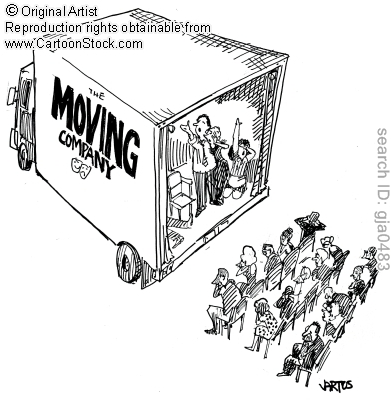
So where’s the balance? You have to decide what direction your theatre company is going. You have to continuously ask yourself why you wanted to start and adjust goals as your company grows. I’ve worked with theatre companies that are strictly part-time for their members (rehearsing in one member’s day-job office after hours; never intending to have a “home base;” raising just enough money to put on the production; rinse & repeat). I’ve also worked with theatre companies that are severely understaffed and those few staff members are underpaid and the level of professionalism and events far exceed the budget and capabilities of the company, while the Head Producer still takes home a thick paycheck (leaving often disgruntled staff and an overall negative feel).
As you may know, I’ve served as the Artistic Director on my own theatre company for the past 3 years. We’ve recently severely re-branded and re-staffed. Opportunities arose, mistakes were made, members quit, new members joined, but most influentially: we developed our true potential. We learned as a company that we can offer many forms of entertainment from indie film to indie theatre to offering services like editing acting reels and voice-over demos; producing music videos and poetry readings; and offering a space for a group of people in NYC who were looking to meet-up with others who shared the same interests. Somewhere along the line we changed our name, but never have we changed our mission (okay, okay, we changed a word here or there but the idea’s the same): “Cutting Edge, Professional Entertainment for an Affordable Price.” The biggest reason I don’t go to more live & filmed entertainment is the high ticket price. I never want that to be the reason someone would miss an event of ours. The more services we offer, the more opportunity we have to raise funds as a company, and can continue to keep prices low while producing quality entertainment. The passion is there, the business plan has been set, and one day we hope to be able to have our dedicated staff operate full-time.
Be upfront, be honest with yourselves and your employees (still consider your volunteers your employees – they are your backbone) and set a business plan for where you want the company to go. There is no right or wrong answer, just know what you’re getting into, learn from your mistakes, and remember to keep the art, the professionalism, and most of all – the passion.

The Real Critic: Reviewers or Audiences?
Ok, so I have a confession to make. I’ve been away for a really long time. Like, more than a month. But I have a really good reason — I was in a play. Correction: I was in a play by Shakespeare. After a long rehearsal process where we spent much of the time improv-ing the scenarios of the play to develop a rich sense of purpose and history for the characters, we opened “TWELFTH NIGHT” at the end of March for a three week run into mid April.
For the most part, it was a successful run. We sold tickets. We had names added to our mailing list. We consistently had donations dropped into the bucket as patrons left the theater each night. Audiences remarked on how accessible we had made the Shakespearean language, and how much they appreciated the subtlety with which we told the story. We had patrons come back to see the show again and again, which is no small feat given that it was a three hour show (we made no cuts to the script.)
Which is why it was all the more puzzling that nearly every reviewer had this to say about what we were doing:
“We really love The Seeing Place Theater and their realistic, ensemble driven approach, but we think it’s a mistake to do ’subtlety’ with Shakespeare.”
Give or take a few words.
And those were just the critics who agreed to post their reviews. Some reviewers love our theater company so much that they neglected to review it at all, stating that they’d rather remain mute than hurt our reputation with a terrible review. (That was nice of them. I think.) There were also some audience members who had a hard time with the fact that Shakespeare was being played as though each characters had a life off stage and an arc. Some were self-proclaimed Shakespeare scholars — most were people who had seen the play before and had a certain expectation going in. Given how untraditional our rehearsal process was, I was certainly prepared for some negative response from the purists.
As an actor (and an idealistic one at that!) I try to pretend that reviews don’t matter. In the grand scheme of things, they don’t — I’ll still give the performance that my director, ensemble and I have built together over hard won and long thought out rehearsals. But in day to day life as an actor, reviews can provide many highs and lows. You get to a point that you no longer read the good reviews because you are trying to avoid the bad ones. I always tell my students that getting a bad review means that you’ve made it to the next level – you’re now someone that the audience has to contend with. I still laugh about the time I was called the “nadir” of a production. (I had to look that word up. I was shocked.) I thought, “My goodness- I must have had a pretty big role to be hated that much!” And then I smiled. It’s those thoughts that make being reviewed a slightly saner process.
All reviews, good or bad, are valid when they’re well written and thought out — we may not agree but that’s the joy of living in a free society. But this last production got me thinking about the nature of reviews and their value. I pose these questions to you: our faithful readers of The Green Room:
Who are the real critics in the theater? The reviewers? Or the audiences?
Who would you rather listen to when choosing to see a show?
Many sites, like TheaterMania, allow patrons to log on and leave reviews of what they’ve seen. Would you be more apt to judge a show based on a cross section of the audience, or would you still hold the reviewers opinions as top dog?
POST A COMMENT: If you have thoughts about reviews, or want to share a story about how you determine which shows to see, I’d love to know about it. Leave a comment so we can all learn from you!
PS: If you like the play, “TWELFTH NIGHT” you might be interested to know that, during one show, I lived tweeted as the character, Maria! I posted a transcript, adorned with production photos, on my acting blog. Enjoy!

A couple of days ago, I found myself tired after a four-mile walk, just about to nod off to nap on a chair with my husband, when…
*Ring Ring!*
I looked down at my phone and one of my colleagues from the Wicked workshop production I’m involved in was calling. And on a Sunday? That never happens. I let it go to voicemail, not wanting to be pulled from a relaxing afternoon nap, but then realized that it must be something important for him to be interrupting HIS relaxing Sunday and called him right back.
“We have a table read for the first season of my production company’s newest web series going on at Shetler Studios in an hour and one of our lead actresses just cancelled on us. Can you make it??”
From makeup-less and half-asleep to at the studio 25 minutes away looking performance-ready? It was a challenge, but I’m always up for a good one of those and I was thrilled to be involved in a new project and eager to help out this colleague of mine, who always does so much good work for others.
How was I able to pull this off? I believe my success was due to three main factors:
1. I live nearby. I think this is key to not missing great opportunities sometimes (I recently had an extra Broadway ticket and couldn’t find anyone to go with me who could make it to the Theatre District on 45 minutes notice — sadface!). But if you can’t or don’t want to live in the middle of everything, be willing to spend some cash to cab it quickly. It’s worth it in my opinion to spend some money in order to build the reputation that you are an ass-saver and that committed.
2. I always have a few performance/audition outfits thought out in my head and clean so that in an emergency, I can just throw something on and know that it looks good. This goes for hairstyles, too. My go-to “bad hair day” or “post-four-mile-walk” do is a big ballerina bun on top of my head.
3. I have a job flexible enough to allow for last-minute shifts like that. I had impending dog business that afternoon when my friend called me, but was able to quickly improvise and reschedule. Also key.
All of these factors and a lot of luck combined into an opportunity for me to take part in this awesome table read:
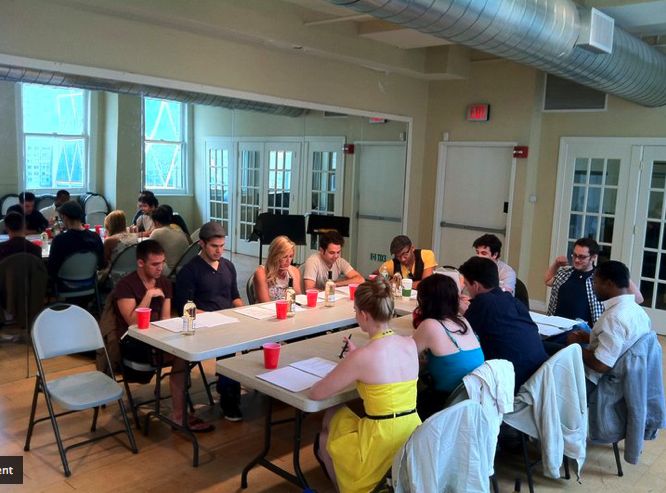
…And then get offered a role in the series when it films this summer, hooray!
This is an absolutely crazy (and wonderful!) industry that we’ve chosen to be a part of. Be prepared for anything, and be prepared in turn to work a lot and be greatly valued!
What is your craziest last-minute work or audition story? What are your best tips for being prepared?

Performers VS. Directors
Tonight is opening night of the show I’m directing– Little Women! This has been such a rewarding experience. Many of these high school and junior high school kids have little to no experience in theater, but their enthusiasm is never-ending! Usually I’m on the performing side of the theater, so this week of tech has been a good reminder to me of what a production team goes through!
Performers: rehearsals are often too long
Directors: rehearsals are never long enough
Performers: tired in the morning from staying up late to ice muscles and wash hairspray out of your hair
Directors: Tired in the morning because you dreamed about your to-do list that needs to be finished before the next rehearsal
Performers: stressed about memorizing lines
Directors: stressed about the actor’s memorizing their lines
Performers: shouldn’t be drinking coffee, because you know it will affect your high B flats, but you don’t care anymore.
Directors: you’ve drunk so much coffee that it lost its effect on you.
Performers: you hate when you are the only performer who doesn’t get notes
Directors: you love that one performer who doesn’t need notes
I’m sure I’m forgetting other differences that I thought of, but alas, my brain is too tired from this week! Break legs, my cast, I’m so proud!


 The Green Room
