The Body Donor Exercise
One disadvantage of college theatre: the actors are all, with some rare exceptions, all within the age range of eighteen to twenty-two. We only have two decades of life experience, which when it comes to casting, leaves us a little lacking.
For example: In our last production, two of my classmates, both nineteen years old, had to portray thirty-something year old characters (which they did, extraordinarily well I might add). In the show I’m working on right now, we have two women, both twenty-two years old, who are playing mother and daughter to each other and another woman playing twice her age. Two more girls did a one-act last semester in which they played a pair of little old ladies. In high school and college theatre, the actors are unfortunately cast in roles they would never be considered for if not for our lack of variety in age. Would you cast a twenty year old blonde as the grandmother?
Makeup helps to an extent, as does costuming but what really gets me is solidified in a monologue one of my professors did once: just by the way he walked across the stage, I knew he had aged twenty years in the span of a sentence.
This is what my professor calls “The Body Donor Exercise” comes in handy. It’s taking on the weight of old age, middle age maturity, a child’s voice. Making movements different from your own natural impulse. I’ve done similar exercises, where I would emulate the way a classmate walks and holds himself but I had to do this specific exercise for a scene once, where I was supposed to be in my sixties. I improved from first to second showing but I won’t be playing an old lady again anytime soon.
And that’s probably an okay thing. Take me personally: I have a younger looking face combined with my short height. The good news is that I can play the fourteen year old for a couple more years. But the scene I just finished working on now had me as the pregnant sixteen year old. While I do remember being sixteen, I was never pregnant.
So imagine my roommate’s surprise when she came back to our dorm to find me now eight months pregnant. I stuffed a pillowcase to the proper size and shoved it under my shirt, walking around our dorm with it, confident that it would not fall out and that my walk was adjusting to my new center of gravity. Even without the belly, my hands started naturally going to my stomach in rehearsal. I needed to support my back to sit down and how I had to push myself up, the way I’d lean over to pick a prop off the floor.
But it was more than just the pregnancy bit that made this role difficult. Some of my friends were astonished to hear that I was doing this scene—as one of my friends said quite bluntly: “But you’re too nice! You’re a sweetheart!”
One of my classmates, a real male ingénue had a similar experience come up, in which instead of his usual love interest scene, he had to play a rough and tough army man, his complete opposite. And now me being the smoking pregnant teen threatening to abort it.
Outside college, an actor probably won’t be playing too far outside his age range but what about experience? What if they’ve never smoked and their character goes through six packs a day? An actress doing a birth scene, or just an ordinary mother and son scene when she’s never had a child? I don’t think I’ll ever forget doing a sex scene for acting class in my second month of college, the two of us just figuring it out as we went along, neither of us having done a sex scene before. Then there’s playing outside the type altogether, which is a whole different blog post right there. Until this scene, I was always cast in the scenes with the shy high school girl who goes to the prom and is suddenly beautiful—or as I call it, the Laura Wingfield type. Where is that production of The Glass Menagerie been all my life? Your Blue Roses is waiting!
In the meantime—looking back through my acting journal, I found a note I took from the beginning of the year on some audition feedback I had asked for. “Not quite edgy, desperate, out-there enough. Still too reserved.” That was then, this is now; it’s all a matter of getting outside the comfort zone, right? Expand your horizons onward!
P.S. I got good feedback for my pregnancy body donor/shockingly unexpected, intense and vicious personality.
P.P.S. and for that sex scene.

My EPA Preparation Strategy
Since I joined Equity this past fall, I’ve been relying heavily on the good ol’ Equity Principal Audition (EPA) to not only look for work, but also to develop relationships with casting offices that haven’t seen my work before and remind others whom I’ve already met of my existence 🙂

After one of the aforementioned EPAs I attended a few months back, I discovered that the Artistic Director of the theater for which I’d auditioned that day wrote (what became) a pretty controversial blog post outlining his disappointment with both the EPA process in general, and with most of the actors who had auditioned that day because their lack of preparation for the auditions and knowledge of the production.
While I was pretty offended with a lot of what he wrote and his method of getting his point across, his post did strike a chord with me and I vowed that I would also learn from it. I had been getting myself pretty prepared for EPAs prior to this, but not always doing everything that I could do. So I decided to step up my game and come up with a step-by-step EPA preparation process that I thought I’d share with you.
My EPA Preparation Strategy:
1. See EPA notice on Playbill/AEA Call/Backstage
2. Is there a role for me?
3. If yes, have I read the play? Give myself a pat on the back if I have, especially if it’s because of Art & Soul Acting‘s book club 🙂
4. If I haven’t read it, use my pal google to determine if it’s a published play
5. If it is, put a hold on a copy from the library or track it down at the Drama Book Shop
5. READ IT
6. If they’re asking for monologues or songs, use my newfound knowledge of the play to determine which one from my arsenal to use
7. Occasionally, I don’t have one that’s appropriate. That means I need to find one and learn it. Usually, if I don’t have one, that means that the style of the play is very specific, so I use a monologue from the play or from the playwright’s body of work.
8. Google the heck out of anyone and anything listed in the audition notice, i.e. artistic director, director, playwright, etc.
9. If there’s a casting office handling the EPA, check my records to see if I know anyone in that office
10. Brainstorm what to wear to subtly suggest character ahead of time
11. Get a good night’s sleep the night before!
12. I generally show up half an hour before the call begins (which is when the monitor is technically supposed to arrive), unless I believe it will be an unbelievably busy call (popular show, exciting theater company, etc.). I often check Audition Update to see how busy it is before I start getting ready!
13. Rock out at the audition (hopefully!)
14. Take a picture of the sheet listing who’s in the room for my records
15. Let my agent know who was there and how it went if it was positive
16. Rinse and repeat!
If I do all of this, I can rest assured that I’ve done all that I can to be prepared to give my best work that day! What is your standard EPA preparation procedure? Do you have anything to add to mine?

Movie Musical Monday, April 23rd: “Kiss Me Kate”
Good morning, and Happy Movie Musical Monday!
Today is our second installment of the three-week long celebration of National Poetry Month and Shakespeare’s Birthday. And in fact: TODAY IS SHAKESPEARE’S BIRTHDAY! HOOOOOORRRRAAAAAAYYYYYYY!!!!!!!!!!!! (Throws confetti in air, blows paper whistle, expresses general frivolity and mirth.)

Okay, okay: time to come clean. We don’t actually know if Shakespeare was born on April 23rd–though we do know that he died on April 23rd 1616, fifty-two years after he had been baptized in Stratford-Upon-Avon on April 26th. Given the common contemporary practice of baptizing children three (or so) days after they were born, it’s popular belief that he was born on the 23rd. And if that’s true, then it means he was born and died on the same calendar date. And that’s kind of nifty.
But how will you celebrate this (not-quite-a) holiday? Take tea with friends? Read a sonnet aloud? If you’re at a loss of what to do to commemorate this–the Bard’s Day–feel free to join us as we look at another movie musical based on a Shakespearean play, MGM’s 1953 production of Kiss Me Kate.

Watching this musical again for the first time in a long time, I was struck by just how good it is. Truly, this is one of the great musical comedies. An interesting premise, served well by a funny and engaging book, plus a beautiful score and brilliant lyrics by the great Cole Porter–you are really hard pressed to be better off.
Kiss Me, Kate had originally been produced on Broadway in 1948, and came at a time where Cole Porter really needed a hit. The shows he had written during the ’40s were not received with the same acclaim as his work from the two previous decades–indeed, they just weren’t as good. After two successive flops in 1944 and 1946, people pretty much thought the man was done. And then: Theatrical Brilliance.
The film version of the musical holds the distinction of being the one-and-only MGM musical shot in 3-D. Yes, it’s true. When you watch the clips below, try to look for shots or actions that may be even more impressive–IN 3-D! Unfortunately, by the time the film was released, the 3-D fad was starting to wane (for at least another fifty-five years or so), so the studio released a 2-D version of the film as well to satiate those less adventurous cinema go-ers.
The last bit of praise I will offer before diving in to this musical is the casting of my (and your) lover, Howard Keel–
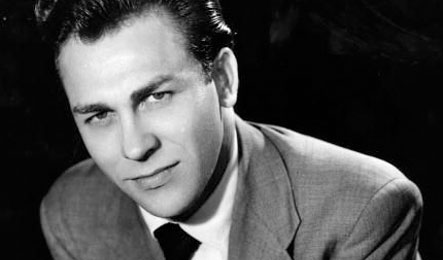
(::Swoon::)
—opposite Kathryn Grayson:

These two just have real chemistry. You totally believe that they’ve been in each other’s lives for years, shared both personal and professional relationships, and that they know each other better than anyone else. The intimacy-from-experience between Lilli and Fred is in the script, but these two actors–who had worked together twice before in 1952’s Lovely to Look At, and of course in the immortal Showboat in 1951–make that quality all the more present, the movie is better for it.

(Just look at them. Aren’t they just darling?)
Remember that picture. You will see it again.
WHAT IS THIS MUSICAL ABOUT?
Fred Graham is about to star in and direct a new musical by Cole Porter, adapted from William Shakespeare’s Taming of the Shrew, called Kiss Me Kate (oh yes we are very meta). We know (and he knows) that he will be brilliant. The problem: the only woman for the part of his female lead is his shrew-ish ex-wife Lilli Vanessi, and she doesn’t take too kindly to anything that’s to do with Fred. Fred somehow convinces Lilli to hear Cole (played by the unlimping-and-therefore-historically-inaccurate Ron Randell) play from the score at the apartment he currently lives in that they used to share. Fred tells Cole to start with a love song, because Lilli is a sucker for a sympathetic lyric. When she arrives, they begin to unfold their little plot.
(Watch the picture frames on the piano in this clip: you will see a shot that shows Fred and Lilli in Annie Get Your Gun, another movie musical Howard Keel starred in, as well as that Showboat picture from before. Oh. So. Meta.)
So it looks like Lilli is wrapped up enough in sentiment when BOOM: Lois Lane (Ann Miller) shows up and starts tap dancing in a costume Louis B. Mayer must have had commissioned and causes a scene that harkens back to a bull in a china shop:
(It is this author’s firm belief that Ann Miller was a great dancer, a true hoofer, but not a great actress, and definitely not a great singer. It is also the author’s firm belief that her relationship with LB is what kept her voice from being replaced in this and other films–since this was (and still is) a huge thing in the event of the movie musical. This may be unfounded, but that’s okay. It’s just a thought.)
Lois Lane (no connection to the Superman character) is Fred’s current fling, and after a minor tiff it looks like Lilli will walk out and Lois will get to play opposite Fred as Katherine. But, like all actors, Lilli’s desire for a plumb role makes her swallow her pride and put up with the idea of working with a man who she now hates. She consents to the project, satisfying Cole and Fred, and relegating Lois to her originally slated role of Bianca.
We jump forward to opening day of the show, and it turns out Lois has been using Fred not only for her part in the show, but also to secure a part for her real boyfriend Bill Calhoun. Bill’s a no good cad (but we all love those, remember?) who’s just lost $2,000 gambling and signed an IOU in the name of our very own director and star Fred Graham. Lois berates him by singing a song lowered from its original key, and then dancing a fun duet at 1:32 (just go ahead and fast forward, because the singing before the dance is a real pass). But she still loves him. (Cads, you know. They got it goin’ on.)
Before curtain, Lilli and Fred reminisce about old times. Lilli reminds Fred that it’s the anniversary of their divorce, and gives him the champagne cork from their wedding breakfast–which is like a really weird gift for this kind of occasion, right? It’s the kind of gift that screams, “LET’S GET BACK TOGETHER,” but she’s marrying someone else now. Then the two of them remember a song from a show they were in years ago, and the shared history creeps up on them:
Fred goes back to his dressing room to be greeted by two thugs, Lippy and Slug–played by Keenan Wynn and James Whitmore, the later of which probably broke your heart as Brooks in The Shawshank Redemption–who were sent to collect on the IOU signed in his name. He’s able to get rid of them–for now. Then flowers from Fred are delivered to Lilli’s dressing room, which also happen to be the exact same kind that were in her wedding bouquet. She responds with those sympathetic lyrics she’d heard that the top of the film:
There’s a card in the flowers as well, but Lilli hasn’t read it yet. Her maid finds it and she tells Fred she’ll keep it right next to her heart during the show, and then puts it down her top. Fred, being unable to retrieve the card, has to start the show and wait for the inevitable, which unfortunately comes while on stage. But they are able to get through a couple of numbers before that. (NOTE: The shortest of Bianca’s three suitors is Bob Fosse.)
Things escalate between Fred and Lilli ad hoc on stage after she realizes the flowers weren’t for her. But the show must go on, with the characters from the B story line:
After this, the rest of the musical is basically spent trying to keep the show going by stopping Lilli from leaving the show in the middle of the performance and holding the gangsters at bay. I don’t want to say anymore, because I really do love this movie musical, and if you haven’t seen it you should. I will leave you with these last two numbers: the first is thugs’ advice to Fred, and really showcases the intelligence of Porter’s lyrics like no other song in the movie.
The second and last number is really a marker of things to come. Choreographer Hermes Pan told each of the dancers playing the suitors (Tommy Rall, Bobby Van, and Bob Fosse) that they could each choreograph a section of the finale. Each dancer does so in turn, first Rall with Miller, followed by Van–who dances with Gene Kelly’s future wife Jeanne Coyne–and then Fosse with Carol Haney. Both Rall and Van are thrilling dancers, working within a framework that was current at the time of this film. But then Fosse enters, and something just erupts on the screen, and people were seeing something totally new. How amazing to witness that moment.
HIDDEN GEM SONGS:
Another hard musical to pull songs from, since so much of it is so well known. Luckily we have a song that was inserted into the film, but is not in the actual stage musical itself to fall back on.
- “From This Moment On”–Great uptempo Porter, good for a man or a woman. What more could you ask for? (Just don’t get it confused with the Shania Twain song.)
With that, we bid you adieu, and Happy Movie Musical Monday!

GUEST POST 2 BY JEN PONTON: On Paper Products & Marketing
Hey-o, Green Room Readers! We have a second guest post from the lovely Jen Ponton, who has already shared her twitter tips and tricks with us on the blog. She had such great information to share, that we’re thrilled to welcome her back with a post all about the various paper goods actors can use to market themselves instead of regular ol’ headshots and cover letters. Check it out, and leave her a comment below if you find her post helpful!

Okay, actors! You have your list! You have your coffee! You are energized! Now are you ready to send out those mailings?! Of course you are! And what will you send?!
Oh, no. Well, that’s disappointing. My friends, hold onto those precious 8×10 headshots–those are so much better sent on special occasions, or given in-person!
Instead, be a creative artist–make OTHER compelling, entertaining and informing things to send in the mail. I promise that it won’t just be effective, it’ll also be fun!
Small headshot/resumes. My business coach (and probably the same stellar marketing maven for many of you, Dallas Travers) is big on a 5×7 headshot and resume. Why? It offers the same content as an 8×10, but is SO much more likely to be opened! Just order some 5×7 shots from a photo site, and make a small ‘sizzle’ version of your resume to staple on. Voila! Put it in some fun small envelopes and off they go!


Headshot or logo postcards. If you’re sending off a quick message–‘just got representation!’ ‘was put on hold for a commercial!’ ‘Moving to the other coast!’–you can totally use one of these suckers. Get over to Vistaprint and just upload a headshot, order some postcards, and you’re golden! And when you get REALLY creative? Get yourself some fun logo postcards. Need help making a logo? I do that!

Show cards/Project cards. Are you really proud of something? Want to advertise your play/episodic/commercial/film? Well, goshdarnit, send out some swanky postcards! (Need help? Again, I do that!) You can use a logo, a screenshot from the project, a behind-the-scenes picture…whatever! If it’s an established episodic and you’re a co-star or guest star, get creative–involve yourself in the show!


One-Sheets. One-Sheets are like full-page ads that are a fun spin on getting to know you! Your first one can be a doozy, but when you finally get it going, it’s really inspiring and affirming to make them, print them and send them off. 🙂 Also a fantastic creative outlet! The first oh-mazing one I ever saw wasHelenna Santos’, and since then, there are PLENTY to browse for inspiration on Dallas’ FB page. I also wrote a great post for The Redheaded Actress about making your own, but if you want to hire help–I do that, too. 😉 Here’s one that I made for the wonderful Suzanne Smart:

Castability Sheets. These are such simple, effective tools! Just gather a few breakdowns that were just PERFECT for you IF ONLY YOU’D BEEN CALLED IN! Shows people your flavor(s) lickety-split. 🙂 Need help?Guess who does these?

Thank You Cards. Send out one of thee suckers when you have overwhelming gratitude in your heart! But the rule of thumb is–keep it strictly THANKS! You can either create some through Vistaprint, buy some blank ones, or have me create custom ones for you.


Anything that feels right! Don’t feel LIMITED by this list–you don’t always have to sell yourself through the mail! What about congratulatory cards on a promotion, on having a project win a Tony or Oscar, on movin to a new office? Dallas Travers calls this sending Whuffie, and it’s a very important part of actually building relationships with people. So keep some blank notecards around for this purpose!
I do hope this has been helpful for all you ass-kicking actors! Please swing by my Facebook to give me a like, my Twitter for a follow, and frequent the official blog–I’d love for you to join the Ships Ahoy community!
Ahoy, Mateys!
Jen
Thanks again for your insights, Jen! Make sure to check her out in Facebook and twitter 🙂
My Week as the Stage Manager
As I found out in my blog post, ASM—the busiest person on/backstage? I was informed that I, as the ASM for my production, I would be stepping up and be the Stage Manager while she was at a conference for the week. One whole week of stage managing a show by myself for the first time—plus doing my usual job of ASM!
MONDAY: before the SM left, she made sure I had everything I needed and my first rehearsal as Stage Manager went pretty smoothly, if I do say so myself! One of the actors had brought in cupcakes, which made my first time especially nice. We didn’t have too many actors called in tonight, as we were working the transitions between scenes, so my first night went nice and easy. Some of the actors even stayed behind to help me put away the props so I wouldn’t be doing everything all by myself.
TUESDAY: Our director decided that we really didn’t need a piano for rehearsals (one of the actors “plays” it throughout the show) so I had to strike one piano from the set. This was also the first rehearsal with the actors off-book, so I started (what will be) my usual job of line notes too. As the director said, I’m wearing too many hats tonight (and all this week) but everyone was pretty patient with me as I took line notes, read lines for actors who weren’t there, took rehearsal notes and answered questions. But Oops! When we dismissed the actors who were not in the next scene and done for the night, they took off and forgot their line notes. I sent out an email reminding them that they will be handed out at next rehearsal and that it’s their responsibility to remember. Problem solved!
WEDNESDAY: By now I’ve noticed how irritating my keys are. As SM, I have the key to the prop closet, which looks identical to my room key and I constantly try to open the doors with the wrong key! Aside from that, rehearsal went smoothly until I suddenly ran out of line notes to fill out. Luckily, the Asst. Director was able to go print more out for me but that’s something I’ll be sure not to do again. The only other interesting thing to report is that I have made a bet with the leading lady: the first rehearsal she gets through without a single line note from me, I owe her a candy bar-otherwise, she owes me!
THURSDAY: Tonight, we started working on Act 3, Scene 1 and it was a bit of a disaster. Missed entrances, lines being paraphrased left and right, a missing actor who didn’t pick up his phone when I called…we sat down and did a read-through of the scene and rescheduled next week Monday to work the scene more fully. Thankfully, the next scene went very smoothly and I noted to the director how well the actors were off-book for that part. Tonight was also a rehearsal with Betsy the dog! We decided that one of the characters should have a pet dog to be onstage in certain scenes. Betsy was rather excited to be here tonight and had to check out everyone in the room before she was ready for her entrance. She couldn’t stay for very long tonight but she’ll be in rehearsals more now that we’re getting closer to the show. So, tonight was certainly more stressful than the other rehearsals but I stayed really calm and kept it all going (I think having an acupuncture session earlier helped).
FRIDAY: Before rehearsals, we had a publicity photo-shoot featuring our three leads that I had to oversee but there wasn’t much for me to do. The Technical Director had part of our set rigged up for us to use (and it looks wonderful!); the Costume Designer had the actors getting their hair done and costumes ready. I was there to make sure our photographer arrived and we had the director onset to approve of the photos being taken. After the publicity photos were done, the Costume Designer got the actress playing Jean Maitland into another dress so we could take her picture. In Stage Door, Jean Maitland becomes a big Hollywood actress and gives the boarding house she used to stay in a portrait of herself as a present and we still need a picture of her looking like Jean was this 1930’s Hollywood star, complete with a fox fur stole, to use for the portrait. The director and I got there right in time for rehearsal straight from the photo-shoot. Since it’s been a long week for everyone, we were only running some short, few people scenes and ended early but not before the director said “Thank you; you did a great job this week, keeping things going, getting everything done and holding the fort.”
And that was my week as the acting Stage Manager. I’ll be glad to hand my keys in when the SM gets in on Monday but I did it! I’m really happy I that I kept the show running as we are getting closer and closer to opening night…Our first run-through is next week, All Day Tech in two weeks from this Friday and then opening night. Actors, take your places please for the top of Act 1. Will somebody hold that dog?
Movie Musical Monday, April 16th: “The Lion King”
Good morning, and Happy Movie Musical Monday!
April is National Poetry Month in America, and also the month where some eccentrics (including myself) celebrate the birthday of the most influential dramatist in the English language, William Shakespeare.

What a guy.
To commemorate this very prestigious time of year, MMM will be focusing on musicals inspired by the works of Mr. W Shakes for the remainder of the month. So let’s start off with the Hamlet inspired box office hit–the highest grossing hand-drawn film in history, that spawned a stage adaptation which currently has the distinction of being the highest grossing musical ever–Walt Disney Picture’s The Lion King.

But before we talk Africa and Elizabethan theatre, let’s address the elephant in the room:
IS THIS MOVIE A MUSICAL?
Yes, for many reasons. Firstly, it has the pacing of a book musical: a little dialogue action, that leads into setting up the next song. Secondly, there is hella underscoring (supplied by One Of The Great film composers, Hans Zimmer). Thirdly, there is a sense of huge production value built into each musical sequence. And lastly: just because it’s an animated film, doesn’t mean it can’t also be a musical. If you still don’t believe me, perhaps you should look to a greater authoritative body. Say, the American Film Institute? They probably know a thing or two about movies and musical production in film, right? Well in that case you should know that Lion King was one of several Disney animated features that had been included as one of the 180 nominees for AFI’s list of the Greatest Movie Musicals back in 2006 (Beauty and the Beast made the cut, coming in at #22–above both Guys and Dolls AND Showboat). So if the AFI thinks this movie is a musical, I think we all have to agree to defer to whatever definition they hold in qualifying this film as such.
Cool? Let’s move on.
WHAT IS THIS MOVIE MUSICAL ABOUT?
Since the movie is based on Hamlet (plus some action from the Hebrew Bible/Old Testament, with the possibility of having been slightly plagiarized from this Japanese animation), you can basically look at the first hour or so of the film as the backstory to the play that we never see on stage. Also, if you haven’t watched this movie in a while (or–if possible–ever), I encourage you to do so soon. I did recently, and it is a lot darker than I remembered it. Which makes it more like Hamlet. Obviously.
It’s year 15-something, and over at Elsinore Rock, Prince Hamlet has just been born to his mother Queen-Consort Lioness Gertrude and father King Hamlet. All the citizens of Denmark show up to celebrate the birth of the future monarch and the perpetuation of the feudal system in place there:
Did you see the prince’s little face? He has no idea he’ll be inheriting the responsibility of avenging his father’s death in due course.
You see, not everyone is happy about this sudden familial addition. Prince Hamlet’s uncle Claudius, brother to King Hamlet, was next in line to the throne, but now this young cub has crossed him from the golden time he looked to. He didn’t go to the ceremony because fuck that. So King Hamlet and his majordomo Polonious go out to have a word with Claudius about civic duty and royal decorum.
Foreshadowing threats, yes–but plots to commit an act of assassination that will overthrow an entire government take time, so its months before Claudius is ready to act. By then, Prince Hamlet is starting to think about how awesome it will be when he grows up and has the run of things. Watch for the Busby Berkeley staging aspects towards the end of this next number.
While Prince Hamlet is fantasizing about firing the tedious old fool during the one and only time we’ll hear him talk about the job with any relish (Point of fact: Hamlet never talks about “how great things would be if I were king” in Shakespeare’s play. It’s almost like he has no interest in the job whatsoever…), his uncle is still hoping to pull a Richard III and pluck down the crown by the usual means. To help him, Claudius enlists the help of several commoners in the land–Jack Cade-like characters who dream of revolution, but don’t have the intellectual wherewithal to pull off such an uprising on their own.

Claudius, however, a very polished public speaker, is able to convince them that he’s the right man to lead them to utopia:
Elizabethan Denmark/Africa was also where Nazism was born, if you didn’t know.
After a previous botched attempt at assassinating Hamlet, Claudius decides to pull out all the stops and stages a massive Wildebeest riot, wherein the prince is nearly stampeded to death. Luckily for him, his dad shows up and saves his almost-rug skin, but then gets taken off himself. When the king is finally able to grasp at a cliff side to pull himself out of danger, Claudius pours an unction down his ear by grabbing his paws with claws and throwing Hamlet the Elder to his Disney-style death.
Prince Hamlet is showing a heart unfortified over the body of his father when Claudius shows up. He twists the knife of obstinate condolement by telling the cub that it’s Hamlet’s fault the king is dead. Hamlet says he didn’t mean it, but Claudius pulls the “Who will believe thee, Isabel?” card, and tells the boy:
“Hamlet, this deed, for thine especial safety,–
Which we do tender, as we dearly grieve
For that which thou hast done,–must send thee hence
With fiery quickness: therefore prepare thyself;
The bark is ready, and the wind at help,
The associates tend, and every thing is bent
For England.”
So Hamlet runs off to England, not knowing that Claudius has sent death after him. However, those murders are amateurs in killing (they always are), and the dane is able to slip through their digital pads. They assume he’s as good as dead anyway, and Claudius takes control of the kingdom, throwing the delicate circle of life out of balance by A) having committed the foul and most unnatural murder of his brother, who was also king; and B) allowing the hyenas to eat way more than their alloted place on the food chain would normally allow them. (Sometimes there is class hierarchy for a reason.) But we’ll come back to this.
Out near England, possibly en route to the channel, Hamlet is discovered by Rosencrantz and Guildenstern, who teach him that worrying is pointless because you have as much control over your life as the result of a coin toss:
Anywhere between eighteen months and five years elapse (which accounts for Hamlet’s mane growth), when Nala shows up out of nowhere looking for help to send back to Elsinore.

You may be wondering, “Shouldn’t Nala be Ophelia?” But no: Nala is WAY too strong a character to be interchanged with Ophelia. Would Ophelia cross deserts looking to raise “twenty thousand men,/That, for a fantasy and trick of fame,/Go to their graves like beds?” Would her thoughts be bloody, or be nothing worth? No: she’d be too busy making subtextualy meaningful bouquets. Nala, on the other hand, wouldn’t go crazy if her boyfriend killed her father: she would just cut a bitch. So Nala is just Nala. End of discussion.
Anyway, Nala and Hamlet hang out, and since she’s the only girl he’s seen in a long time and he’s the only other male lion she’s seen in years, they consider each other things divine and sparks ignite:
But despite this sudden love match, Hamlet can’t shirk the guilt over his father’s death. He runs off, yelling at the heavens with pain and remorse. Suddenly, the Fool from King Lear shows up, and through some verbal banter and a reflection, tries to teach Hamlet that his father’s legacy still exists within him. But what really convinces Hamlet is the appearance of his father’s ghost, who basically tells him to buck up, do the right thing, and “remember me.” Well all that, plus a bump in the head.
Hamlet returns to Elsinore. Nala, Rosencrantz, and Guildenstern soon catch up with him. The city is a wasteland, its resources and industry exhausted from having to support too many citizens at extravagant standards of living for so long. Hamlet remarks that something is rotten in the state of Denmark (probably the decaying dream of socialism). R&G put on a play-within-the-play to create a distraction for Hamlet to find Claudius. After a show down, it is revealed that Claudius had actually killed King Hamlet. He’s then left to be devoured by the masses, while Hamlet bears himself, like a soldier, to the stage, and bids the cannons shoot. The rest (after a musical reprise) is silence.
End of musical!
HIDDEN GEM SONGS:
Unfortunately, this movie is so well-known, that there is literally no “hidden music” in it. Sorry, ya’ll. Luckily, Disney decided to draw a little more from this cash cow and made two straight-to-video-sequels, The Lion King 2: Simba’s Pride (which is a very loose re-telling of Romeo & Juliet), and The Lion King: 1 1/2 (which feels like the company’s take on Rosencrantz and Guildenstern are Dead). Here are a couple of songs from those movies you may find useful:
- “Love Will Find A Way”–from Simba’s Pride, this song is really quite lovely. Written as a duet, it could be sung by either a man or a woman and done solo.
- “That’s All I Need”–from Lion King: 1 1/2, this is a great song for anyone auditioning for Timon (though possibly not good for anything else).
That’s all for now, but thanks as always for stopping by, and Happy Movie Musical Monday!
The ASM — The Busiest Person On/Backstage?
We are now a month from opening night for the final mainstage production of the year: Stage Door, the Kaufmann and Ferber play about Hollywood versus Broadway set in a theatrical boarding house in the 1930s. Aside from being the final show of the year, it’s also our largest, a total of thirty-two actors and a dog, not to mention it’s my first big college production and as an Assistant Stage Manager!
Last year as a freshman, we were all assigned to spend a semester in the Scene Shop building sets and then a semester making costumes. I worked on some of our independent projects too, assisting whomever needed a second pair of hands backstage, but this was different. These are the big shows and this was the first time I ever went to Upperclassmen sign-ups. Since I hadn’t been cast in any of the shows, I was just going along with what ever happened. All I knew was that I couldn’t cut wood—although I’m rather decent with a paintbrush and the pneumatic stapler and I’m fine with heights, I can’t keep wood measurements straight in my head so I had to avoid being put in the Scene Shop again. Suddenly it was my turn for assignments and I said, “I guess I could learn to stage manage?”
Next thing I knew, I was the new rehearsal ASM for Dance Ensemble (another mainstage show) last semester and now I’m actually ASM-ing for Stage Door. I won’t lie; for only being a sophomore, that’s kind of impressive.
What does an Assistant Stage Manager do? When I was working on Dance Ensemble, I covered rehearsals while the real SM was working on her other Theatre Practice so Stage Door is really my first time taking a show from rehearsal to opening night as the Assistant Stage Manager. So far, I’ve attended all the production meetings, taking notes that get sent out to everyone afterwards. I do the odd job, if something needs to be printed and hung up on the board and fetching props. Now that we’ve gotten into rehearsal, I’m busier: I set up our rehearsal space with gaff tape and rehearsal set pieces, calling in actors who are late, schedule fittings and as soon as we start the rehearsal, I bury my head in the script. With late-night classes and illnesses going around, we haven’t had a rehearsal with perfect attendance yet, so I’m reading the missing lines, doing the doorbell/telephone sound effects for timing and when the actors get off-book next week, I’ll be taking line notes as well.
Our lead actress and I were talking during our break yesterday about our favorite rehearsal dinners and our mutual love for Reese’s Fast Break bars when she said “I think you are the busiest person in the show, what with the doorbell and doing all these characters and everything else”. So says the actor whose character is onstage in every scene!
I feel busy. Busy is usually good for me, not busy means that I don’t know what to do with myself. But being busy means that I don’t get to go to club meetings—one of the things about college I’ve embraced was joining clubs and now I don’t get to meetings because I’m in rehearsal. I don’t have a lot of time to hang out with friends and my rehearsals for class are now usually scheduled during my lunch. My parents don’t hear from me and are only assuming I’m alive. Let’s not forget I’m also a college student with classes to go and essays to write too! Still—being busy means that I am busy: I have something to do and I’m happy to be doing it (so long as Starbucks is still open once I’m let out of rehearsal).
Then at the end of one rehearsal, the Stage Manager turned to me and said “So, I’m going to the USITT (United States Institute for Theatre Technology) conference next week which means you’ll be in charge.”
Starting Monday, I’m an actor as ASM who’s playing the role of the SM for the week. One week—I can do it. Right?
Producing…? Have I Lost My Mind?
I’ve always heard that it can be incredibly rewarding to stop “sitting around waiting for someone to create work for you” and to dive into producing your own work. I’ve also always considered myself to be a pretty smart lady and a proactive actor when it comes to creative career avenues to walk down. And I’m not a complete stranger to producing — I did co-produce a pretty lovely production of “Stop, Kiss” at Hofstra as part of my senior thesis project.

Please note my adorable husband in the middle of the back row. This was our one and only time on stage together.
Reasons this would be totally awesome:
1. It would be artistically thrilling, and that’s something that’s been lacking in my showbiz life of late
2. It would be a really great way to get my name out there more, hopefully garnering good reviews and getting some of the many industry people I’ve been painstakingly building relationships with to come see it
3. I already have a project in mind that would be totally amazing to work on, and I think would excite my fellow collaborators and audience members alike
4. I’m friends with so many talented people who could help give a beautiful artistic life to this project and have a chance to showcase their own work
5. The very idea excites me into potential action — case in point, I spent half the weekend researching theatre space rentals and successful indiegogo campaigns
Reasons that this terrifies me:
1. Money
I have absolutely no experience in fundraising (beyond the $1,000 or so that I raise every year for the March of Dimes Preemie Walk in honor of my little sister), and I’m not entirely sure how much support I could garner from my personal network.
I already successfully orchestrated our complicated and ridiculously fun wedding on a shoestring (for NYC) budget, which I feel has a remarkable amount in common with producing a theatrical performance. I really think the biggest difference is the money factor. Which admittedly scares me.
I guess the next step for anyone with half a brain is to reach out to my colleagues who have done this already and ask them for guidance and advice. I’m lucky in that regard — I personally know several people who have done this and done it well.
So, what do you think, green room peeps? Does this sound exciting? Or slightly terrifying?


 The Green Room