GUEST POST BY STELLA DUFFY: On Being Thankful in the Arts
Happy Thanksgiving, fellow Green Roomers!
Please welcome guest poster Stella Duffy to the blog today. I chose to schedule her post on a major holiday (which is usually against Green Room tradition) because it’s so relevant to the ideas of today.
I approached Stella to guest post for us after stumbling across this beautiful post she wrote on women in theatre via a friend’s Facebook link. Stella is a talented London-based writer, director, teacher, and sometimes actor, and we are honored to have her here sharing her thoughts on being thankful for each moment.
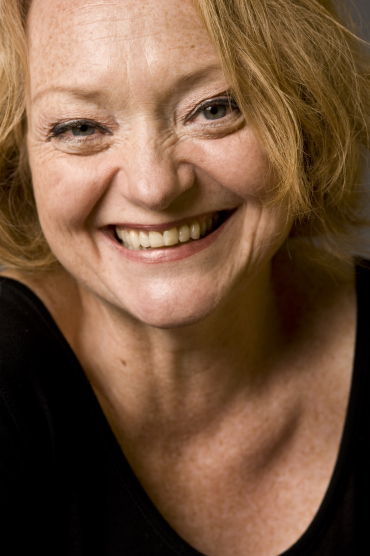
photo credit Gino Spiro
Momentary Gratitude
I turn fifty next year, and for the past year or so I have been revelling in being ‘middle aged’. It’s not what it was when my Mum was young. It may not even be what it was when I was young. But this is what it feels like to me – a place to step up, to step into what power/strength/fortitude/resilience I have learned in the past 30 years of making theatre and of writing. A place to lean back on the work I’ve made – good and ‘bad’ (the mistakes and the failures that have always resulted in some kind of magic, if only I’ve looked hard enough, welcomed them in warmly enough), and to consider what next.
I’m not sure what next might be. I write novels, I direct theatre, I sometimes write theatre, I still work as an improviser, I very occasionally still work as an actor, I sometimes teach all of these things – usually the combination that is Writing for Improvisers or Improvising for Writers.
In my 20s it was all about the acting, the theatre, as a performer, as a stand-up, as an improviser. In my late 20s it moved into writing and has stayed there ever since. I also tried directing in my mid 20s, ran from it (partly because, back then, directing was most definitely more for the boys, and partly because I didn’t – yet – have the skills I felt I needed to make a good enough job of it). In my 30s it was much more about the writing, writing novels especially. Then in my 40s it came back to directing, which feels – to me – the perfect synthesis of what I know about storytelling from writing novels, and what I know about acting from being an actor, from writing and making scripted, devised and improvised theatre.
Back when I was 25, half my life ago, I thought it was about doing just one thing. I think we often think that when we’re younger. And even though I wasn’t doing just one thing, not even then (I was already writing, already also directing) I still felt a huge pressure – from the world, from myself – to be on some kind of career trajectory.
But working in the arts rarely has a career trajectory, and seeing oneself as an artist has it even less, and yes, still today, being a woman and being an artist has even less of a path. Especially if we want (or try and try and fail, as I did) to have children. There is no path that supports us. We are – as performers, actors, writers, directors – in a profession that until just the last century was very much about a few star women and many men. A profession that in its very founding (Greeks) banned women from the stage. A profession that has only begun to realise the potential of the women writers and directors ready to step up, jump in, and that still doesn’t always, doesn’t quite, know how to receive our work.
We’re getting there, we’re not there yet.
And so, as a gift to you, my young American women friends, at Thanksgiving – here’s a suggestion:
Try being thankful for the moments.
Not the job that might lead to another job, but for the job itself.
Not the meeting that might lead to more work, but for the meeting itself.
Not the audition that might land the one big job, but for the audition itself.
Not the review that might lead to more work, but for the review itself.
Not the great day in rehearsal that might lead to an amazing show, but for the great day itself.
Not the great piece of writing that today’s work is going to turn into, but the fact that there is time, and space, and energy to sit down, even for half an hour, and do that writing now.
Try putting less pressure on every damn moment, and just letting the moment be the thing it is, joyful and precious and fortunate, in and of itself.
Basically, this just boils down to be now, not some imagined time in the future. Because we cannot be anywhere else. All that dreaming into the future is pointless if we can’t also find some joy in the present.
I’m no more skilled at this than anyone else, but I understand most of the readers of this blog are a little younger than me, and I understand this to be something that I have only fully begun to embrace as I become older. (I hope to be brilliant at it by the time I’m 85.) That it is the moment that matters. Just as we know on stage, there is no point thinking our character ahead to the end of the play, we need to be in the play, in that moment, in the scene, for itself. Then we’re better actors because we are there – in the moment.
And we can take that into life. We can be moment to moment in life. In our work. For those of us who love our work, even when it is making us exhausted and a little crazy, then it might as well be our life. My life is my work because I made every hobby or interest I ever had into my work. I make no apology for that. I love what I do – even when I’m hating it.
We can push ourselves less to create the perfect product and more to create the best moment possible, each moment, daily, weekly. Of course, I truly believe this DOES create a better ‘product’ – show, book, play, whatever – but by giving the process priority over the product, we allow ourselves more moments of ‘failure’. Those apparently painful mistake times when, actually, we learn more, we grow more. Being thankful for ALL the moments.
That saying about how “life isn’t a dress rehearsal”? No, it’s really not. It’s a workshop, a week early on in the process where all you’re doing is finding out and exploring and trying things and making mistakes and risking and going for it and feeling brave and feeling scared and making an idiot of yourself and knowing you can do it because you’re being taken care of, taking care of yourself, and because everyone is in the moment of finding the moments. Life is not slick, tidy, polished, fixed, ordered, sorted, arranged, underscored, beautifully lit, perfectly designed, or choreographed. It’s most certainly not an opening night of something that’s been all fixed (or not!) in preview. It’s an individual moment that, very simply, leads to the next individual moment. Be thankful for the moments.
Thank you so much for sharing, Stella. We are honored by your beautiful sentiments. For more of Stella, check out her site here and follow her on twitter!
Anonymous Showbiz Confessions Post #3
All of this week’s posts are written by my fellow Green Room Bloggers (not myself…or are they?), but I have published them all under my username to protect their identities. Hope you enjoy their confessions!
I’d like to start this blog post on a positive note by saying I have been blessed to work with some incredible directors. Men and women who I could trust, respect, learn from, and communicate easily with. There have been a few (2, maybe 3) in my career that I would choose not to work for again, but things remained on friendly terms, and in the end, the good outweighed the bad.
Until now.
My latest show has been THE WORST theatrical experience of my life.
I kick myself for not seeing the signs earlier. What director stops a first read thru to give notes, and insists that the actor make the change right then before we can continue the reading?! Or when an actor has a question about a scene, but the director doesn’t know what scene or page we are on, because he doesn’t use a script when directing? If only these little “quirks” were where this ended.
One time the director didn’t want to block a song, so he made me do it. On the spot, while he corrected my choices. “I don’t like that. You need to play more. Don’t do it the same every time.” When I told him I might need some time to write basic blocking into my script he refused to let me. “Haven’t you ever done improv?” he asked me. Oh dear director, if only this was improv! I love improv! But no, it’s scripted musical theater. And blocking is YOUR job.
The next rehearsal the director called me out in front of that cast with some very mocking words about my emotional history. I get it, acting is being emotional vulnerable But violating my feelings in from of everyone is not the way to get me to that place.
When we started rehearsing on the stage, I had some serious apprehension about the safety of our set. I calmly communicated these fears to our director, then the stage manager, then the producer, with no response. Scratch that– the response I got from the producer was “actors adapt; when you know where the hole in the flooring is, you’ll avoid stepping there.”
After that meeting I had a long talk with my manager. Who gave me the green-light to quit the show. Then I talked to a friend on the phone, and the water works started. Every negative interaction and word the director had thrown at me had finally broken me down and all I could do was cry angry tears as I sat in Starbucks, 100+ miles away from anyone who I really trusted.
I had to make a choice. I could quit the show and go home, maintaining my sanity, health, and safety. But leaving would mean a new reputation for quitting a show a week before opening. I was the biggest role in the show and had no understudy; the show would be cancelled if I left this late in the process. Staying meant continuing to work with people who didn’t treat me with respect and were not willing to ensure my safety. IS THIS REAL LIFE? My manager suggested maybe I was on a horrible reality tv show about insane small town theater owners. IF ONLY!!!
So I stayed. I knew my personal regret for quitting would overwhelm me. I chose to not let a bad situation bring me down. But I set boundaries for myself. I (without announcing to the director, of course) refused to do anything that I felt was unsafe. If I was late on an entrance because it wasn’t safe to change in the wings (they ignored my request for railings, hand grips, or a backstage dresser), well then I was late. I had expressed my concerns, they chose to ignore them, and the only thing that matters now is my safety. I refuse to let my future success and health suffer because of one production. If I have to adjust my blocking because the stage floor is cracked and I don’t want to fall thru and break my ankle, well then I will. Basically I have become a bobble head doll, constantly smiling and nodding, while keeping on my alert at all times. The latest break through on this story is that the director wants me to change how I’m playing a very pivotal moment in the show. His request only solidifies my thoughts that he doesn’t understand the emotional arch of my character, and I’m torn with how to handle this note because changing this moment changes the entire rest of the show for me.
I hesitate to even blog about this. I tend to think that voicing negative experiences like this will reflect badly on me, but at this point I am beyond that thought and only wish to avoid ever being in a situation like this again. Friends, don’t ignore red flags when working with a new director or company! There are reasons that Actor’s Equity has so many rules about the way theaters must be run, and those reasons are to protect us (I need to join the union ASAP). In closing, let me share a story about a director who I have so much respect and love for. In fact, I’ve done four shows with him, and hope that number only grows as the years pass. We were learning a dance and he blocked me to be dancing on a rolling and turning ladder. I felt uneasy on the ladder and expressed my concern to him. “Get down and let me do it” he said. So he climbed the ladder and did my choreography while the other dancers turned the ladder. This was so assuring to me, that he would put himself in my position, and see how “unsafe” the ladder was. Probably more unsafe for him, because he weighs more than I do, but his point was proven. He wouldn’t put me in anything that I wasn’t comfortable in, and more importantly, he wouldn’t ask me to do something that wasn’t safe. THIS is the kind of director we should all aspire to work with.
Anonymous Showbiz Confessions Post #2
All of this week’s posts are written by my fellow Green Room Bloggers (not myself…or are they?), but I have published them all under my username to protect their identities. Hope you enjoy their confessions!
Sometimes I think theatre is pointless. What good are we really doing? This hit me with an extra potent force when I saw my mom in the ICU this September after having major surgery that removed cancer in her lungs. It was caught early and all is well, so there’s nothing to worry about. But the point is, all those doctors and nurses were so much more valuable to society than I felt I ever would be as a theatre artist.
Plays seem so earth shattering to us but is that only because we’ve analyzed them to pieces? We’ve looked into them more deeply than any regular theatre patron ever would. Think about the plays that mean the most to you. Aren’t they the ones you’ve spent the most time in? The ones you’ve broken down in your three ring binders, highlighting social, political, philosophical, relgious, lines etc etc. You’ve identified beats, you’ve paid close attention to word choice. You’ve read the play ten times. You’ve caught on and can now appreciate the playwright’s careful attention and brilliance. You’ve realized the meaning. You’re left with its tone, its mood, the feeling of its theme and you can even bottle it up in one succinct meaningful phrase. You’ve done this because maybe you’re acting in it, maybe you’re directing it, maybe it’s an assignment for your modern drama class. Or script analysis. You weren’t a big fan of the play at first, but now it speaks to you. After all this research, you love it. You understand it. You get it. It’s done it’s job on you.
But when you see a show … isn’t it much more vague? You may feel moved at some point. It may spark a coversation. But how long does that impact last? How much of what you saw do you remember two days later? If you see it again, you’re amazed by all the little parts it seems you have missed. If you missed something, surely everyone else did too. If this play is apparently so life-shattering, we shoudn’t be missing anything, should we?
Don’t plays impact us the most when we’re on the inside? Aren’t the people who get the most out of a production the ones involved in it? The ones who have spent days and days in the world of the play, who have had time, notebooks, and links online to research and absorb it all.
Think of the theatre that’s touched you the most. I bet you either read the script a thousand times or you were involved in the production.
Are we selfish with our craft?
Do we only like to think that theatre serves our audience in a way that is more than just escapism?
I guess my big question is:
Does theatre really reach out past the edge of the stage (or the page) or are we just feeding ourselves and pretending we’re doing something great?
I can write a play for my mom, but I could never have told her she had cancer. And then once I found out, I could produce that play about her, but I never could have gotten the cancer out. And by the time it grew, I could have brought her to a production of this play, but I never could have saved her life.
Anonymous Showbiz Confessions Post #1
All of this week’s posts are written by my fellow Green Room Bloggers (not myself…or are they?), but I have published them all under my username to protect their identities. Hope you enjoy their confessions!
Going Non Union
I was lucky enough to join all three unions when I had to. I wanted my Equity card more than anything but I didn’t buy in or sneak through a backdoor. I put in hard work and it led me there. I was a must join for SAG but it was on a commercial that more than paid my initiation fee, but when I joined AFTRA I felt like I got mugged. I had to pay $1600 to do a job that paid less than half of that. I booked a one word (not even a whole sentence) on a network tv show that got cut. Too bad so sad, but these three er…two unions don’t keep me alive.
Now I am not here to bash SAG (SAG-AFTRA) or AEA. They have done some good things for me. I had a big issue with a show I was in and AEA stood up for me. SAG jobs always pay well and they tend to make sure things run smoothly. But my issue is not with what they do right, or even wrong, it’s with what they can’t do.
I wasn’t an actor when the strike happened that supposedly made it so easy for jobs to go non-union, but I shouldn’t have to suffer from it. I only joined the SAG and AFTRA because I had to or else I would lose work. I think there is value in being a union actor, but at the end of the day, my bank accounts value doesn’t change.
According to SAG-AFTRA Global Rule One “No member shall work as a performer or make an agreement to work as a performer for any producer who has not executed a basic minimum agreement with the Guild which is in full force and effect.” But SAG never acknowledges that most producers (in NYC especially) do not execute said agreement. Thus we union actors have an even smaller pool of jobs of which we can work.
I did a film in Florida and many of the local actors were SAG. They were booking non-union stuff every day. I asked them how this was possible and apparently SAG considers Florida a right-to-work state. Meaning there aren’t enough SAG jobs to tell SAG people they can’t work on non-union ones. How is this fair? Sure NYC has more producers and hence more shoots and SAG jobs, but it also has 10 or more times the amount of actors and competition. It’s not like SAG NYC helps me get jobs or even auditions, and since I don’t have an agent, how do I even get seen for the only jobs I am supposed to be allowed to do?
I still get calls from casting people and agents for non-union auditions. I usually turn them down, but I had a talk with my partner (and myself) and realized, I need to work. As much as I want to uphold my union standards, and not “scab,” fact is I am trying to build a life, a career and a portfolio. My partner and I want to buy property one day, we want to pay off our debt and we want to be able to have a nice dinner when we want, not when we run into some money. As much as I want to be a fine upstanding union member, I also want to be a living human being who can pay my rent doing what I love and not working 5 restaurant shifts per week.
I am no longer losing sleep worrying SAG will show up at my door with the naughty stick. I won’t lose sleep feeling like a bad actor or an ungrateful union member, I will sleep well knowing that I worked today, I will sleep well knowing that we can buy that appetizer and not worry about the bill at the end of the meal, I will sleep well knowing I have a bed to sleep in. And would SAG ever even find out anyway?
Editor’s Note: “Anonymous Confessions” Post Series!
This week, our Green Room Bloggers have all written posts that are anonymous confessions about The Biz — posts that share details or gripes that they wouldn’t want associated with their names or blogging identities. Stay tuned for some juicy posts this week!
GUEST POST BY MICHAEL RODERICK: Someone Else’s Keys
Please welcome Michael Roderick to the blog today! Michael is a New York City Producer and “People Connector” whom you should know! Today he’s sharing one of his best tips for networking and advancing in your career.

Someone else’s keys
At some point in your life, you have probably had a moment when you got a key to something that didn’t open the thing it was supposed to. You most likely felt frustrated and may have even tried to force the key into the door. In this scenario, one of two things happens:
You break the key.
You realize you have the wrong key and you try to find the right one.
The same scenario is true for your career. There are going to be things that you think will lead you to the next big step that turn out to not lead anywhere, projects that sound like they will solve all of your problems that fall flat, and people who you’ll expect have the answers who end up knowing less than you. In a world full of keys that don’t fit into the doors that you want to open, what are you going to do?
Use those keys for someone else’s door.
On my blog I spend a lot of time discussing networking and connecting. I usually make a couple of hundred introductions every few months, and with all the time I have spent working with artists on various projects, the same issue always presents itself. There is always something missing and inevitably whatever is missing falls into the category of something that another person has and many times may not even know they have it. While you sit here reading this, there are thousands of keys surrounding you.
Your facebook friends, twitter followers, LinkedIn connections, mailing lists, blogs, event pages, Kickstarter pages, etc. Every one of these things is a key for someone else’s door. The best way to figure out who needs which key is to get out there and ask. When you do this, when you take the time to figure out how you can fill in the missing pieces, something really cool happens. Other people start to share their keys with you.
Success in any field is not about digging in your heels and doing it all yourself, it’s about figuring out what you can do for others. We’re all walking around with someone else’s keys. We need to get out there and start opening other people’s doors. I want you to do one really simple thing for me and comment on this post, tweet with #someoneelseskeys, and tell us about how you reached out to someone else and how something you had was something they needed. Maybe you’re a great artist and someone you know needs a poster, maybe you have a day job in a publishing office and someone you know is dying to speak to a publisher, maybe you are a yoga enthusiast and someone you know wants to learn more about yoga.
Give.
Help.
Connect.
Don’t waste all of those keys you have. Start opening doors and tell the world about it!
Success doesn’t happen in a vacuum.
It happens in rooms where people are opening doors for one another.
You have someone else’s keys right now.
This very second.
Go.
Use them.
Excelsior!
P.S.- If you want to meet other connectors and learn more about connecting, check out this conference!
Thank you so much for sharing your wisdom with us, Michael! To keep up-to-date with Michael, check out his links or follow him on twitter!
The Nightmare Scene
This semester, I’m taking a class that I’ve wanted to take since I was still in high school: Stage Combat. I’m finally learning everything I dreamed I would when I was an itty-bitty fourteen year old learning from a workshop; it’s tough, there’s no denying that it’s one of the hardest classes I’ve taken here.
To start with, there’s me. I’m short with small hands and feet, I’m also not particularly strong. When I’m naturally walking, I’m “up”, on my toes. My physical being is wrong for stage combat—I’m not grounded or centered low to the ground and I’m not able to throw you across the room either. I mean, I love getting taken down with a good Hip Throw but realistically, I’m not going to be taking anyone down in a fight based on physical appearances. My money’s on the other guy! Changing the way I move and being comfortable with it has been a huge process for me this past year, taking Tai Chi and modern dance to help me overcome that. I’ve seen progress, small changes in the way I walk (if the holes in the soles of my shoes are to judge) and improvements in technique.
I’m still having trouble with my forward/backward rolls and some of the combat styles we’ve covered, like Kung Fu but my biggest challenge so far was my latest scene, the Nightmare scene:
This is a two person fight sequence, carefully choreographed: it’s brutal and ugly. Essentially, the “Beast” character chokes, throws, punches and kicks the “Victim” senselessly to the ground. The combat is short and simple but it’s deceptively difficult to do.
- Everybody has to learn both parts (Beast, Victim) and perform them.
- The Beast is supposed to be the evilest, darkest aspects of ourselves, while the Victim is subjected to our worst fears. OUR worst fears.
You can see why this scene was such a nightmare? We were not playing an absurd ninja or an old lady waiting for the bus—it’s a physical challenge, mentally hard trying to get into mindset of a murderer/rapist/bully and then emotionally, because you really have to trust your partner to let them torment you with your fears.
My partner for this scene just happened to be my complete physical opposite: a very tall, strong guy. While my Victim scene would look great, it made the second scene very hard to stage and look plausible. As if being the Beast wasn’t hard enough already! My friends joke because I’m a sweetheart and a saint who should never play the bitch and now I was going to have to show them an ugly, terrible person who would beat someone while they are down. Meanwhile, my partner worried over accidentally hurting me while being the Beast and trying to figure out what his greatest fear as the Victim.
Our showing was the most emotional class I’ve ever sat through. I called home afterwards, to ask about my family’s normal lives which don’t involve being allowed to beat people up. We were all very shaken up and overwhelmed by seeing our friends look like they are being attacked/are the attackers. It was hard, to stand back during my scene was the Beast and watch my partner reeling from the effects of the “punch”. The first few times we really ran the scene, I couldn’t look him in the eye even though it was almost entirely non-contact. I had to learn to really use my weight and momentum to create a physical force to be reckoned with, at least visually. Being the Victim was so much easier to the point where I was like “let’s run this scene again!” It’s strange and doesn’t seem right, because my fears are real and terrible but staging my fears makes it okay: that once we have the choreography down it doesn’t matter what I’m emotionally doing because physically, my body’s got it down and mentally, my actor-brain is keeping me in check in case something goes wrong mid-scene.
But all of us actor-combatants all took it seriously: nobody messed up and really got hurt, nobody sat it out or had to stop their scene. I learned that I can play the Victim role easily enough but also that I can be the Beast when the scene calls for it. And if I should do a show where there is such a scene, I know I can handle it and can trust my combat partner to do it. As another one of my professors says “all violence in the theatre must be agreed upon”.
Another scene down, another one to go. I’m sure there are more challenges up ahead, starting with testing for certification coming up in December and next semester’s Stage Combat part 2.

My First Time
Your first time shouldn’t be with just anybody. You want to do it with a great show.
I instinctively knew that in starting to audition for unpaid roles, being the absolute best actor in the room may not be the most important factor. The director and the others involved were all doing it for love of the project, and for the joy of creating — not to get rich. So I knew that at least as important as my actual performance would be showing that I would be a decent person to work with and spend many stressful hours with in the crafting of the play.
A week after my first audition left me without a part but with new confidence in my ability to actually do this crazy acting thing, I audition for a political satire called “The Pundit”. I have worked in political media for 15 years, and spent some of that time as a pundit myself, so I thought it might be fate that this be my first role. The show was to debut at the Capital Fringe Festival two months later, and the writer had written three acclaimed Fringe shows in the past, so I knew it was a show that would get a lot of attention.
The audition itself went very well. I got the humor and nuance of the sides I was given, and I did a decent job of playing each scene in different ways and with different partners. I also hit it off with the director, who, like me, is very interested in politics and policy. That night, in an e-mail to thank him for his time, I said I was very interested in this show because of my background and that I would do anything, even just behind-the-scenes stuff, just to be a part of it. I was selected for the smallest of the six parts — which is exactly what I wanted, since I was just getting started and did not want to overextend myself while trying to figure out what I was doing.
A few weeks later, looking ahead beyond Fringe, I auditioned for another show. The Rude Mechanicals are a long-standing D.C.-area theater company focused mostly on Shakespeare but also on other Elizabethan and classical works. They were putting up “Lysistrata” in late August. I had forgotten which old Greek play “Lysistrata” was, so I Googled it. “Oh, it’s THAT one.”
This time, I auditioned mainly because I liked the people — people I had yet to meet. I had traded a few e-mails with one of the Rudes’ mainstays, and for a reason I cannot recall, I said I did not think I could actually do the show, but that I might audition for their next production. He said I should come give it a try anyway. When I again demurred, he wrote back saying I could just come to the audition anyway and just meet the gang and hang out. “Wow,” I thought. “If they’re all this positive and welcoming, I’ll make my schedule work for this show.”
The Rudes have a reputation for being very supportive of newcomers — and for rather lewd spins on the classics. I got points for being daring in the audition, playing some rather explicit scenes with a fellow auditioner I’d just met with confidence and humor. (An experienced actor, she told me she was amazed I was new at this, as did the director.) I read for all the male parts, and the director told me I could head home. “I can read for the penis,” I said, half-jokingly.
The original joke the Rudes were bringing to this very old sex comedy was having the, um, male parts of the sexually frustrated Athenians and Spartans played by actual actors in giant dick suits. So I found myself on the floor kneeling between the legs of another actor, playing his mighty sword.
I got a small part in the show, but no one was cast as the penis. A few weeks into rehearsals, I asked who was actually going to get that part. The director said anyone who was free during those scenes could have it. A few of my castmates absolutely did not want that part. I absolutely did.
Why? It looked like a heck of a lot of fun, and it was also an opportunity to show what I could do. The role was entirely physical and mostly improvisational, and over the next few weeks we worked out some really funny bits. (A friend from my improv troupe was recruited to play a second schlong, responding to a tweet from me: “We need someone to play a giant penis. Yes, I am serious.”)
Though it didn’t occur to me when I volunteered for the part, in doing so I went from being on stage for less than 10 minutes with about a dozen lines to being out there for most of the show, in a role that, even if I’d done a horrible job, would have been a showstopper. The jokes were easy to make — a “large part”, a “hard role”, etc. — but it got me a lot of applause and a few very favorable mentions in reviews.
At the start of spring, I had never even had an audition. By the end of August, I had played a terrorist limousine dispatcher in one show, and a giant penis in another. And there was more to come.


 The Green Room